
Table of Contents
- Why Separating Pets at Mealtime Matters
- Method 1: Use Separate Rooms for Feeding
- Method 2: Individual Bowls and Elevated Feeders
- Method 3: Pet Crates and Enclosed Feeding Spaces
- Method 4: How to Keep Dogs and Cats From Eating Each Other's Food
- Method 5: Microchip Pet Feeder for Food Stealing Prevention
- Pet Feeding Station Ideas for Multi-Pet Homes
- Common Mistakes to Avoid
- Frequently Asked Questions
Last Updated: October 17, 2026
Why Separating Pets at Mealtime Matters
When multiple pets share a home, mealtime can turn into chaos. One pet wolfs down their food, then steals from another's bowl. A cat with dietary restrictions eats dog food meant for a different size and metabolism. Tensions rise, along with the risk of digestive upset, weight gain, or food guarding that escalates into conflict.
The 5 best ways to separate pets at mealtime solve this problem directly. They protect each pet's health, reduce stress during feeding, and give you peace of mind that everyone gets the right nutrition in the right portion.
At PetzGlow, we understand the challenges of a multi-pet household. Feeding time should be calm and controlled, not a scramble. These five proven methods suit different home layouts, pet personalities, and lifestyles, whether you have two cats, three dogs, or a mixed household.
Method 1: Use Separate Rooms for Feeding
The simplest and most effective approach is feeding pets in different rooms. This physical separation eliminates competition and lets each pet eat at their own pace without stress or distraction.
How to set it up: Designate one room per pet or pair of pets, such as a kitchen for one and a bedroom or laundry room for another. Place each pet's bowls in their assigned space and close the door during mealtime. Feed them at the same time so the routine stays predictable.
Why it works: Separate rooms remove the temptation to steal food and prevent food guarding from developing, since there's no competition to trigger it.
Practical considerations: This works best in homes with multiple rooms. In an open-plan home, feed pets at different times instead, leaving at least 30 minutes between feedings so one pet finishes before the other starts.
Method 2: Individual Bowls and Elevated Feeders
Each pet needs their own bowl, but the type and placement make a real difference. Elevated feeders, stands that raise bowls off the ground, add separation and health benefits.
Elevated feeders reduce strain on the neck and joints, which is valuable for senior pets or those with mobility issues. They also make it harder for one pet to access another's bowl.
The PawHut Raised Dog Feeding Bowls With Stand at $59.99 suits smaller dogs and cats. It features two stainless steel bowls on an MDF base with anti-slip feet, so it stays stable during enthusiastic eating. The elevated design aids digestion and contains spills, and the dishwasher-safe, rust-free bowls make cleanup simple.

Setup strategy: Place each pet's elevated feeder in a separate corner, or combine with room separation for maximum control. Space feeders at least 3-4 feet apart so pets can't reach each other's food.
Method 3: Pet Crates and Enclosed Feeding Spaces
Crates provide a secure, contained space where each pet can eat without interruption. This works particularly well for dogs and during the transition period when pets learn new feeding routines.
A PawHut Heavy Duty Metal Dog Crate, in Medium ($290.28) or Large ($269.03), creates a dedicated feeding zone with a grated floor and removable tray for easy cleanup, plus rust-resistant powder coating for durability. For smaller dogs, the 41" Dog Crate with 2 Doors and Soft Cushion at $239.99 offers front and side access and a washable cushion.

How to use it: Place the food bowl inside the crate during mealtime. Your pet eats in a confined, secure space where other pets can't interfere. After 15-20 minutes, remove the bowl and open the crate. This prevents free-feeding and keeps mealtimes structured.
Why crate feeding works: Dogs instinctively respect a crate as their personal space, and once acclimated, most view mealtime there as a positive routine. It also aids house training and provides a calm retreat outside of feeding.
Method 4: How to Keep Dogs and Cats From Eating Each Other's Food
Dogs and cats have different dietary needs and portion sizes. A dog eating cat food (often higher in fat and protein) can gain weight, while a cat eating dog food may miss essential amino acids. Combine physical barriers with behavioral management.
Barrier method: Use a baby gate or pet gate that lets cats pass but blocks dogs, and place the cat's food on the other side. Many households also put the cat's feeding area on a raised shelf or counter, unreachable for dogs.
Scheduled feeding: Feed cats and dogs at different times. Give the cat 20 minutes to eat, then remove the bowl before the dog's feeding time. This eliminates the opportunity for one pet to access the other's food.
Microchip-activated feeders (covered in the next section) are the gold standard for this specific problem, as they allow only the designated pet to open the bowl.
Method 5: Microchip Pet Feeder for Food Stealing Prevention
For households struggling with persistent food stealing, microchip-activated feeders are the most advanced solution. These feeders open only when a pet wearing a microchip collar approaches, preventing other pets from accessing the food.
How they work: Each pet wears a collar with a microchip or RFID tag. When that pet approaches, the lid opens automatically; any other pet triggers no response and the feeder stays locked.
Why choose this method: Microchip feeders eliminate guesswork and require no human intervention during mealtime. They're ideal for multi-pet homes where scheduling separate feeding times is impractical, or where pets have learned to steal food despite other barriers.
Real-world application: This works especially well with multiple dogs of different sizes or dietary needs, or mixed cats and dogs with conflicting schedules. Each pet gets exactly their portion, nothing more.
The investment is higher than other methods, but for households with chronic food-stealing issues, the peace of mind justifies the cost. Look for feeders with backup battery systems and easy-to-clean designs.
Pet Feeding Station Ideas for Multi-Pet Homes
A well-organized feeding station makes mealtime smoother and keeps your home tidy. The key is designating a specific area, using appropriate equipment, and maintaining a consistent routine.
PawHut Raised Dog Feeding Bowls With Stand, Stainless Steel For Extra Small →
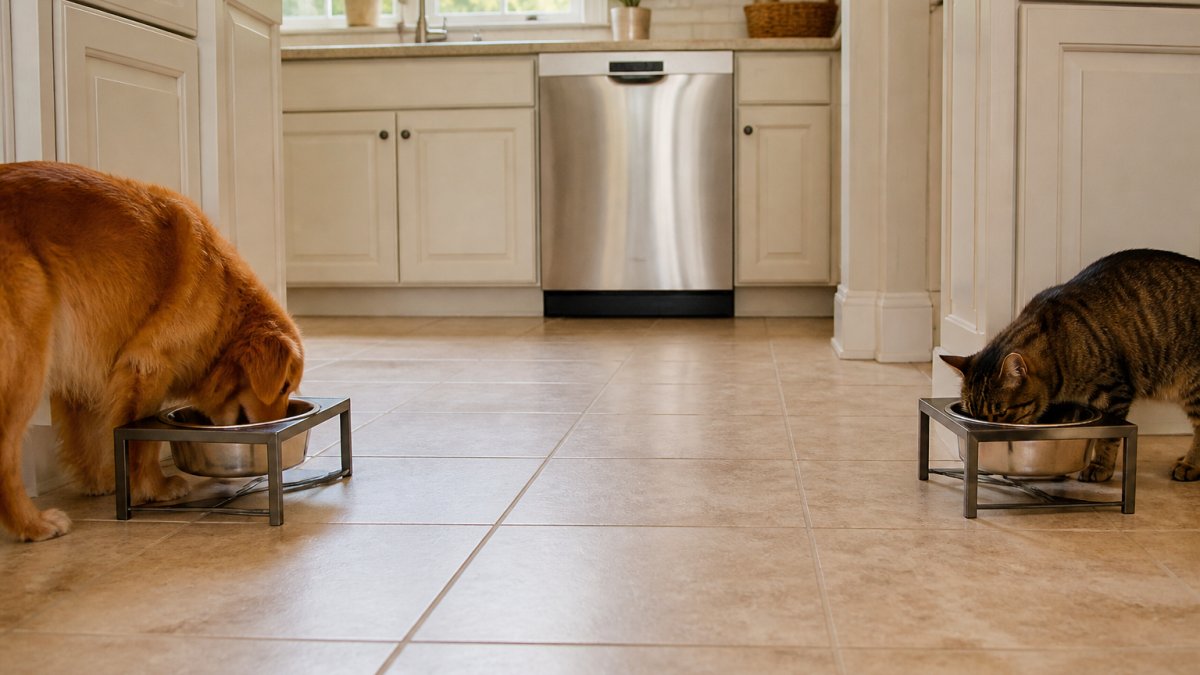
Design your station: Choose a low-traffic area such as a kitchen corner, laundry room, or mudroom. Use washable mats under each feeder to contain spills and define each pet's space, and label bowls or areas with pet names if several pets eat nearby.
Equipment essentials: Elevated feeders like the PawHut Raised Dog Feeding Bowls keep bowls stable and off the floor. For multi-pet homes, consider the Dog Bowl Double Bowl Automatic Drinking option at $29.50, which provides separate water access and can be positioned for different pets.

Storage and cleanup: Keep food in airtight containers near the station and bowls in a dedicated cabinet or shelf. Wipe the area daily and wash bowls after each meal.
Portable solutions for small spaces: If you live in an apartment or small home, the Foldable Pet Playpen Portable Soft Cage at $59.99 creates a temporary feeding enclosure. Made from durable 600D Oxford cloth, it sets up in seconds and folds for storage when not in use. This lets you create separate feeding zones without permanent structural changes.
Common Mistakes to Avoid
Understanding what doesn't work helps you choose the right approach. Here are the pitfalls most pet owners encounter.
Mistake 1: Leaving bowls down all day. Free-feeding makes it impossible to monitor each pet's intake and creates constant opportunities for food stealing.
Mistake 2: Using the same bowl for multiple pets. Shared bowls defeat the purpose of separation.
Mistake 3: Ignoring dietary differences. A senior dog on a prescription diet shouldn't eat the same food as an active young cat.
Mistake 4: Introducing changes too quickly. Switching suddenly can stress pets used to eating together.
Mistake 5: Not supervising during the transition. When you first implement a new feeding method, stay nearby to monitor behavior.
Mistake 6: Choosing a method that doesn't fit your home. A tiny apartment can't fit separate feeding areas, and an open floor plan needs different solutions than a multi-room house.
Feeding time doesn't have to be stressful. Choose one of these five methods and stay consistent to create a calm, organized routine that keeps every pet healthy and happy.
PetzGlow makes multi-pet feeding easier with quality products designed for households like yours.
| Method | Best For | Setup Time | Equipment Cost | Ongoing Effort |
|---|---|---|---|---|
| Separate Rooms | Any multi-pet home with multiple rooms | 5 minutes | Minimal (bowls only) | Low, consistent routine |
| Elevated Feeders | Homes with limited space; senior or joint-sensitive pets | 10 minutes | $30-$60 per feeder | Low, daily cleanup |
| Pet Crates | Dogs learning new routines; homes needing containment | 15 minutes | $240-$290 per crate | Medium, crate training required |
| Physical Barriers (Gates) | Mixed-species homes (dogs and cats) | 5 minutes | $20-$50 for gate | Low, supervision during transition |
| Microchip Feeders | Persistent food stealers; pets with medical diets | 20 minutes | $150-$400 | Very Low, fully automated |
Quick Reference: 5 Best Ways to Separate Pets at Mealtime
- Separate rooms, Most effective for eliminating competition; requires multiple rooms
- Elevated feeders, Combines health benefits with food separation; works in compact spaces
- Pet crates, Provides containment and security; best for dogs during training
- Physical barriers, Gates and elevated platforms; ideal for cats and dogs living together
- Microchip feeders, Automated solution for chronic food stealing; highest upfront cost
Real-World Scenario: Multi-Pet Household Success
A household with two dogs of different sizes and one cat faced constant mealtime chaos. The larger dog would eat his food, then steal from the smaller dog's bowl.
When to Consult a Veterinarian
If a pet shows signs of food guarding aggression, refuses to eat in a new setup, or displays digestive upset after dietary changes, contact your veterinarian.
American Veterinary Medical Association feeding guidelines
Pet Nutrition Society recommendations for multi-pet households
ASPCA guide to pet behavior and food-related aggression
Frequently Asked Questions
How can I keep dogs and cats from eating each other's food?
The most effective approach combines physical separation with supervision. Feed them in separate rooms or use a cat flap that only allows your cat through to its feeding area. If that's not possible, try elevated feeders for cats (which dogs may struggle to reach) or use a microchip-activated feeder that only opens for your cat. Supervise all meals and remove bowls immediately after eating. Start with whichever method fits your home layout, then reinforce it with consistent mealtime routines.
Should pets eat in separate rooms?
Separate rooms are one of the most effective feeding strategies, especially in multi-pet households. They reduce competition, prevent food stealing, and allow each pet to eat at their own pace without stress. However, if your home layout doesn't allow separate rooms (like in open-plan apartments), barriers, crates, or microchip feeders work just as well. The key is choosing a method that physically prevents access to each other's food during mealtime.
What's the best way to introduce separation gradually?
Start by feeding pets near each other (but not touching), then slowly increase distance over several days. Once they're comfortable, move to different corners of the same room, then to separate rooms if possible. Use positive reinforcement, praise and treats, when they stay calm. If you're using crates or barriers, let pets explore them during non-meal times first. Gradual introduction prevents stress and helps pets accept the new routine as normal behavior.
Can I use a pet playpen or crate to separate pets during feeding?
Yes, pet crates and playpens are excellent for mealtime separation, especially in smaller homes. The Foldable Pet Playpen ($59.99) provides a portable, ventilated space where one pet can eat safely away from others. For larger dogs, the PawHut Heavy Duty Metal Dog Crate (Medium at $290.28 or Large at $269.03) offers sturdy, easy-to-clean enclosures with wheeled bases for mobility. These work well for dogs but may not contain cats effectively unless the enclosure is fully covered.